How to Identify Valuable Vintage Costume Jewelry
TLDR: How to identify valuable vintage costume jewelry comes down to five things: designer marks, clasp style, materials, construction quality, and era. Signed pieces from makers like Trifari, Miriam Haskell, and Eisenberg can sell for $50 to $4,000 or more, according to auction records on LiveAuctioneers. Flip the piece over, check the back for stamps, and look at the clasp type to date it. If you have a box of old jewelry sitting in a drawer, it could be worth real money. Text Chad at (407) 529-6952 for a free, no obligation evaluation at Busby Antiques in Oviedo, Florida.
Last Updated: July 12, 2026
How to identify valuable vintage costume jewelry is one of the most common questions I get from people who inherited a box of old brooches, clip-on earrings, or rhinestone necklaces from a parent or grandparent. They want to know if what they have is junk or treasure. I have been buying vintage jewelry for over 25 years, and I can tell you that the answer surprises most people. That drawer full of “fake” jewelry could hold pieces worth hundreds or even thousands of dollars.
Vintage costume jewelry is one of the hottest collectible categories in 2026, with dramatic, ornate pieces from the 1940s through the 1980s leading the charge. Younger collectors are driving demand for statement pieces like oversized brooches, beaded necklaces, and enamel earrings, pushing prices higher across the board. Here is exactly what to look for.
Check for Designer Marks and Signatures
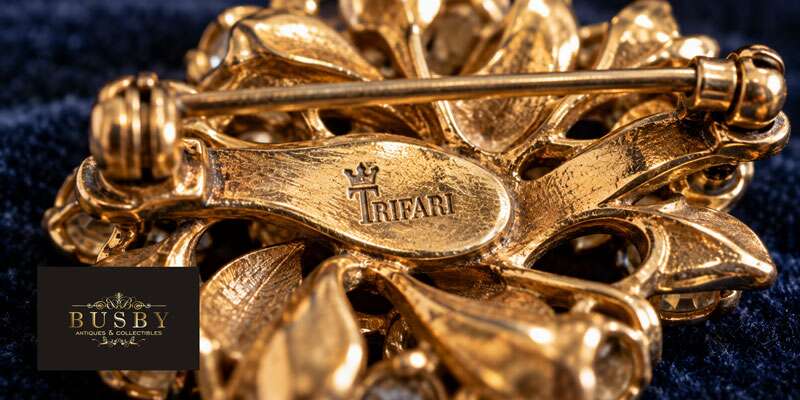
The single fastest way to identify valuable vintage costume jewelry is to flip it over. Look at the back of any brooch, the inside of a bracelet, or the clasp of a necklace. You are looking for a name, initials, or a symbol stamped into the metal. According to Dr. Lori, a nationally recognized antiques appraiser, signed pieces almost always sell for more than unsigned ones, sometimes 10 times more for the same style.
Designer marks that signal real value:
- Trifari: Look for “KTF” on pieces from the 1920s and 1930s, or the famous crown over the letter T from the late 1930s through 1950s. Rare Trifari pieces have sold for over $4,000 at auction, according to LiveAuctioneers auction records.
- Miriam Haskell: Early pieces from the 1920s through the late 1940s often went unmarked. The classic oval “Miriam Haskell” stamp became standard after 1950. Haskell sets regularly sell in the $500 to $1,000 range at auction, according to Collectors Weekly.
- Eisenberg: Marks changed over the decades. Look for script “E” or “Eisenberg Original” from 1935 to 1948, bold “EISENBERG” in capitals from 1945 to 1958, and “Eisenberg Ice” for their diamond look line starting in the 1960s.
- Other valuable names: Weiss, Schiaparelli, Christian Dior, Chanel, Coro, Marcel Boucher, and Hobe are all highly collectible.
One thing I always tell people: do not assume an unsigned piece is worthless. Some of the most beautiful vintage costume jewelry was never signed. Bakelite jewelry, Art Deco geometric designs, and hand wired pieces can all carry serious value even without a maker’s name.
Date the Piece by the Clasp
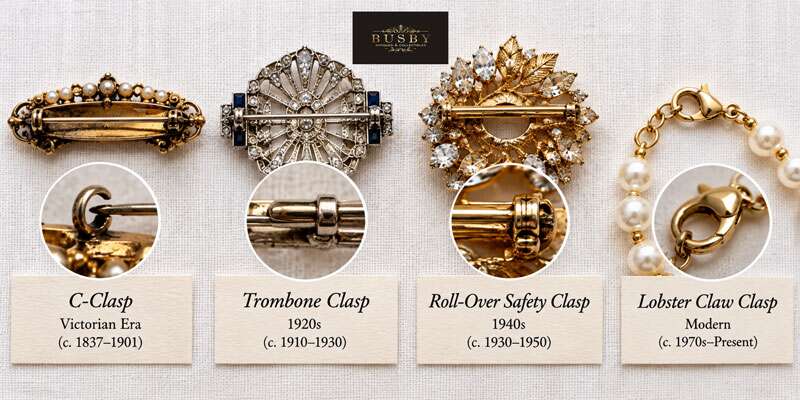
The clasp on a piece of vintage costume jewelry tells you roughly when it was made, and older usually means more valuable. Here is a quick guide I use in my shop every day:
- C clasps (simple C shaped wire): Pre-1890s through early 1900s. These are the oldest and signal a potentially very valuable piece.
- Trombone clasps: 1890s through 1940s. Named for the sliding tube mechanism. A strong indicator of age.
- Roll over safety clasps: 1940s through 1960s. The added safety catch tells you this is mid century, a sweet spot for collectible costume jewelry.
- Lobster claw clasps: 1970s to present. These are the modern standard. If a piece has a lobster claw clasp, it is newer and generally less valuable (though not always).
Copyright symbols on the mark also help with dating. According to TruFaux Jewels, a respected costume jewelry reference, designers could not copyright jewelry designs before 1955. Any piece with a copyright symbol next to the maker’s mark was made after that year.
Evaluate Materials and Craftsmanship
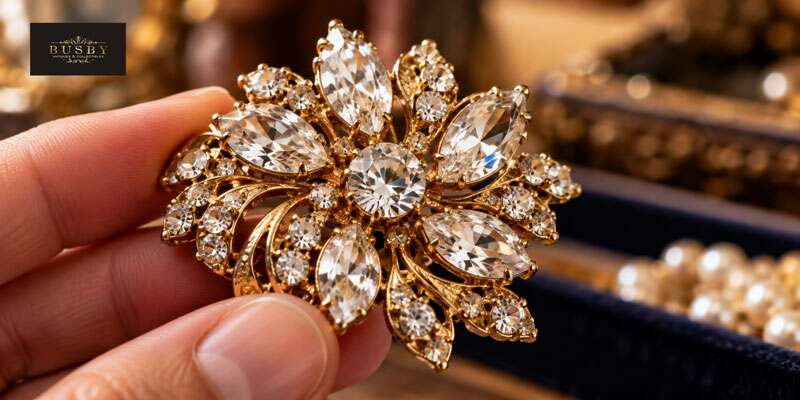
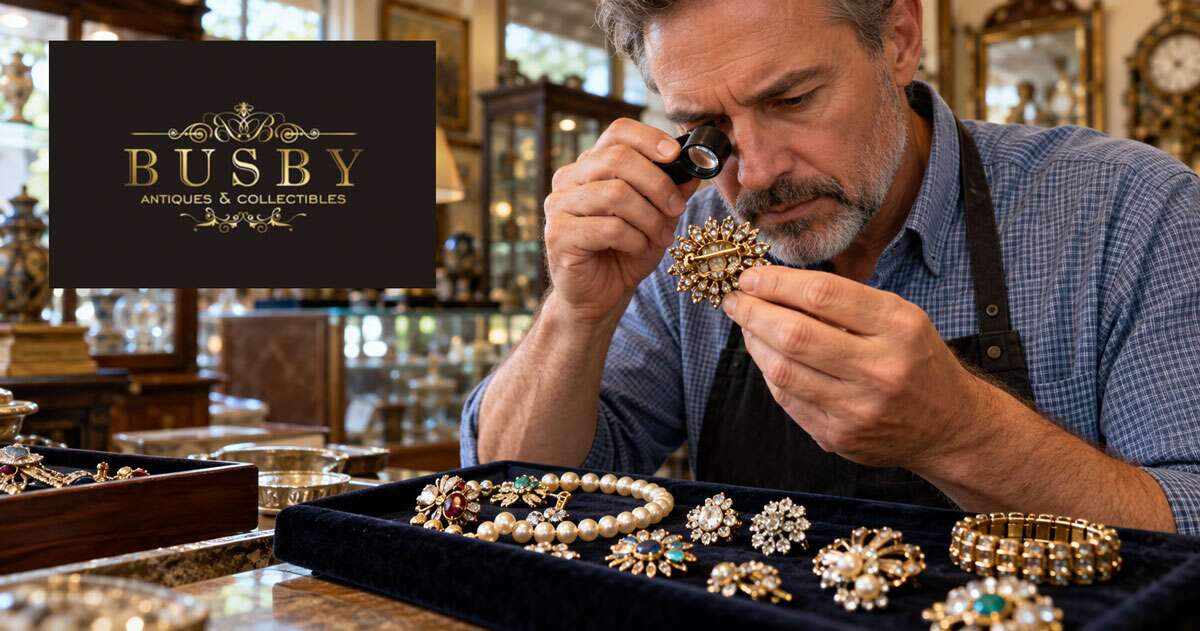
High quality vintage costume jewelry feels different from the cheap stuff you find at a department store today. Pick up the piece. Does it feel solid and substantial in your hand? That weight comes from better metal alloys, thicker plating, and real craftsmanship.
Signs of valuable craftsmanship:
- Hand set rhinestones: Each stone individually placed in its own prong setting rather than glued in. The stones should be bright, clear, and firmly seated.
- Quality metal work: Look for detailed filigree, clean solder joints, and smooth edges. Cheap reproductions have rough seams and visible glue.
- Substantial weight: Valuable pieces from the 1940s and 1950s used heavier base metals like pot metal, sterling silver, or gold washed alloys. If it feels like a toy, it probably is one.
- Intact original finish: Vintage pieces with their original rhodium or gold plating still intact are worth more than those that have been replated or show heavy wear.
I have seen people toss out pieces that looked “old and tarnished” without realizing that the patina itself was a sign of age and value. A little tarnish on the right piece is not a problem. Major damage like missing stones, broken clasps, or heavy corrosion does reduce value, but even damaged signed pieces from top designers still sell.
Know Which Eras Are Worth the Most
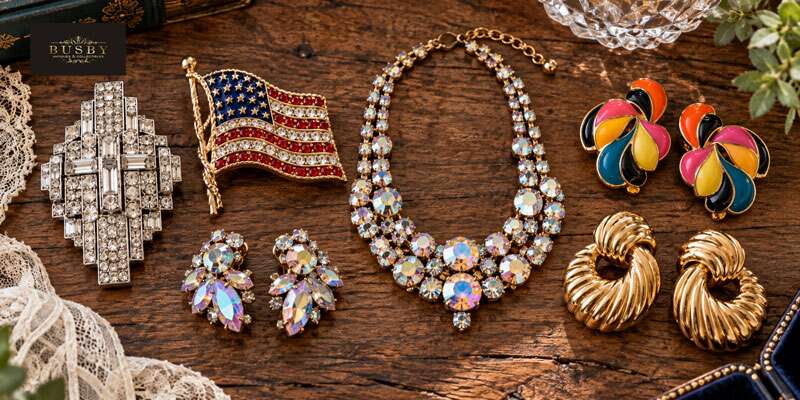
Not all decades are equal when it comes to vintage costume jewelry value. Here is how the eras break down based on what I see in my Oviedo antique store and at shows across Florida:
| Era | Style Characteristics | Typical Value Range (Signed Pieces) |
|---|---|---|
| Art Deco (1920s to 1930s) | Geometric shapes, bold lines, chrome and rhinestone | $100 to $1,500+ |
| Retro (1940s) | Patriotic themes, large brooches, rose gold tones, sterling | $75 to $800+ |
| Mid Century (1950s) | Aurora borealis rhinestones, pastel colors, elegant sets | $50 to $600+ |
| Mod (1960s to 1970s) | Bold enamel, pop art, oversized pendants | $30 to $400+ |
| Power Dressing (1980s) | Chunky gold tone, statement earrings, faux pearl ropes | $20 to $300+ |
Art Deco pieces consistently command the highest prices because of their bold design and the quality of materials used during that period. But do not sleep on 1940s sterling silver pieces. During World War II, base metals were rationed for the war effort, so many costume jewelry makers switched to sterling silver. Those wartime pieces are both historically interesting and genuinely valuable as silver.
Watch Out for Fakes and Reproductions
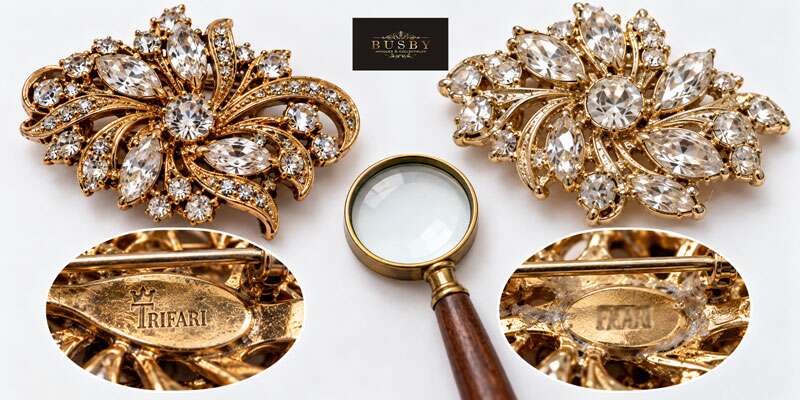
The popularity of vintage costume jewelry has created a market for reproductions. I see them come into my shop regularly, and spotting them is part of the job. Here is what to watch for:
- Too perfect condition: Real vintage pieces from the 1940s and 1950s show some wear. A piece that looks brand new but claims to be 80 years old is suspicious.
- Lightweight construction: Modern reproductions use thinner, cheaper metals. They feel flimsy compared to the real thing.
- Blurry or uneven marks: Authentic designer stamps are clean and precise. Fake marks often look slightly off, too deep, or poorly positioned.
- Modern findings: If the brooch has a vintage style front but a modern pin back or lobster claw clasp, it is likely a reproduction or has been repaired (which reduces value).
- Artificially aged finish: Some reproductions are treated with chemicals to look old. Real patina develops unevenly over decades. Fake aging looks uniform.
If you are not sure whether a piece is authentic, that is exactly when you want a professional opinion. An experienced antiques appraiser can identify reproductions in seconds that would fool most casual sellers.
What to Do If You Think Your Jewelry Is Valuable
If you found designer marks, old clasps, quality craftsmanship, or pieces from the right era, here is what I recommend:
- Do not clean them aggressively. A gentle wipe with a soft cloth is fine, but harsh cleaners, ultrasonic machines, or abrasive polishes can destroy the original finish and reduce value.
- Keep sets together. Matching necklace, bracelet, and earring sets (called a parure) are worth a lot more as a complete set than sold individually.
- Photograph the marks. Take clear, well lit photos of any stamps, signatures, or patent numbers on the back. This speeds up the evaluation process.
- Get a professional evaluation. Online research gives you a starting point, but nothing replaces having an experienced dealer examine your pieces in person. Condition, authenticity, and market demand all factor into actual value.
I evaluate vintage costume jewelry at my Oviedo shop every week. Whether it is a single signed Trifari brooch or an entire estate collection, every evaluation is free and every offer is no obligation. I pay cash on the spot for pieces I buy.
FAQs About Identifying Valuable Vintage Costume Jewelry
How do I know if my old costume jewelry is worth anything?
Check the back for designer marks or stamps. Signed pieces from brands like Trifari, Eisenberg, Miriam Haskell, Weiss, and Schiaparelli are consistently valuable. Even unsigned pieces can be worth money if they feature quality craftsmanship, hand set rhinestones, or materials like Bakelite or sterling silver. The best way to know for sure is to have an experienced vintage jewelry buyer evaluate your pieces in person.
What is the most valuable vintage costume jewelry brand?
Trifari and Miriam Haskell consistently rank at the top. Rare Trifari pieces have sold for over $4,000 at auction, and Haskell sets regularly bring $500 to $1,000. Eisenberg, Chanel, Christian Dior, and Schiaparelli are also highly sought after by collectors.
Can unsigned vintage costume jewelry be valuable?
Yes. Many quality makers did not sign their early pieces. Bakelite jewelry, hand wired beadwork, Art Deco rhinestone clips, and pieces with exceptional craftsmanship all carry value regardless of whether they have a maker’s mark. An expert can often identify the maker of unsigned pieces based on construction techniques and design characteristics.
Where can I sell vintage costume jewelry in Florida?
At Busby Antiques in Oviedo, Florida, I buy signed and unsigned vintage costume jewelry, complete estate collections, and individual statement pieces. I serve sellers across Orlando, Winter Park, Winter Springs, and all of Central Florida. Text me at (407) 529-6952 and I can usually give you a preliminary estimate within a few hours.
Should I clean vintage costume jewelry before selling it?
A gentle wipe with a soft, dry cloth is fine. Do not use harsh chemical cleaners, ultrasonic machines, or abrasive polishes. Aggressive cleaning can strip original plating, loosen stones, and reduce value. Bring the pieces as they are, and let the buyer assess condition before any cleaning happens.
Got a Box of Old Jewelry? Let Me Take a Look.
I have been identifying and buying vintage costume jewelry for over 25 years at Busby Antiques in Oviedo, Florida. Whether you have a single signed brooch or an entire estate collection, every evaluation is free and every offer is no obligation.
Text Chad at (407) 529-6952 to set up a time. I answer texts fastest. You can also email me at [email protected] or call (407) 529-6952.
Busby Antiques is located at 838 Eyrie Drive, Suite 1060, Oviedo, Florida 32765. Visits are by appointment only.
How to identify valuable vintage costume jewelry starts with knowing what to look for, and sometimes the best move is letting a professional do the looking for you.